
CUET Exam: Gateway to 280+ Top Universities
Your Complete Guide to the Common University Entrance Test
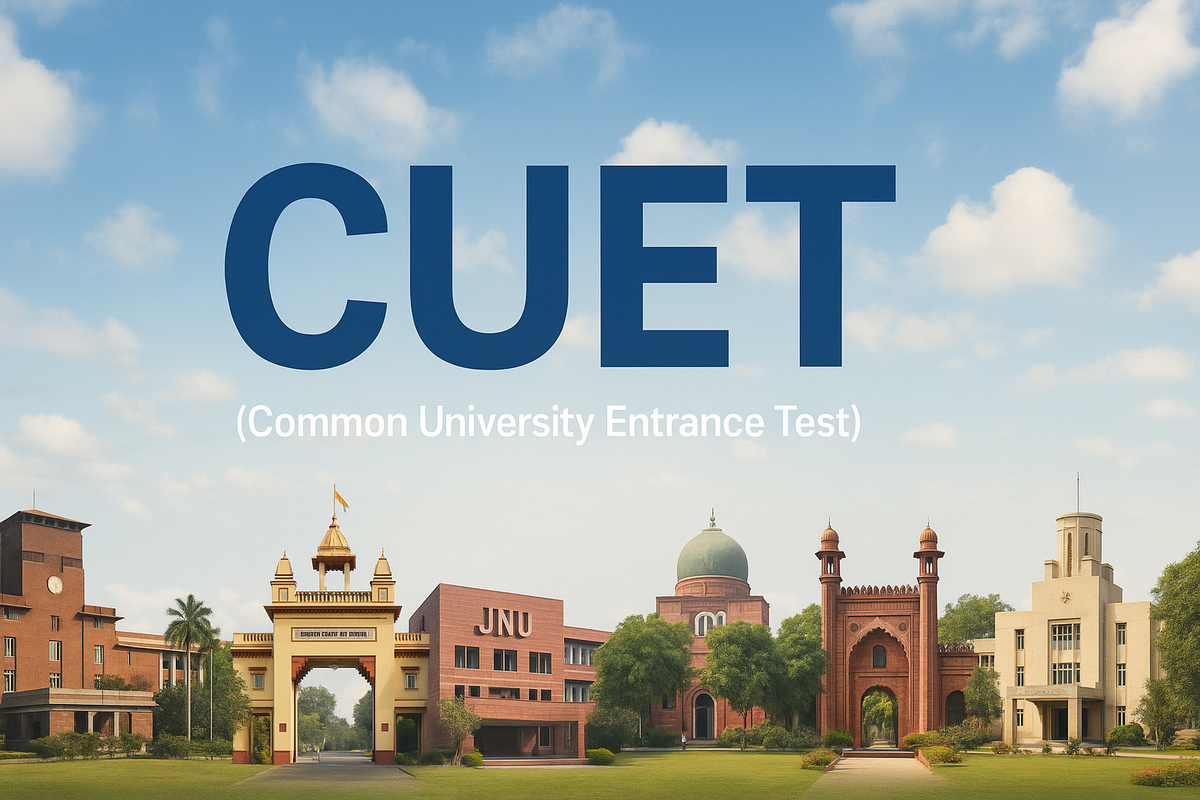
The Common University Entrance Test (CUET) is a national-level entrance examination conducted by the National Testing Agency (NTA) on behalf of the Ministry of Education, Government of India. CUET represents a revolutionary shift in India's higher education admission system, providing a standardized, merit-based pathway to undergraduate programs across the country.
CUET is accepted by over 280 prestigious universities including 47 Central Universities, 57 State Universities, 37 Deemed Universities, and 196 Private Universities. This includes premier institutions such as Delhi University (DU), Banaras Hindu University (BHU), Jawaharlal Nehru University (JNU), Jamia Millia Islamia, Aligarh Muslim University (AMU), and many other top-tier universities across India.
Unlike traditional board-dependent admissions, CUET focuses on merit and aptitude rather than board exam percentages, creating a level playing field for all students regardless of their educational board. With admissions to diverse programs including BA, BSc, BCom, BBA, BTech, and specialized courses, CUET has become the single most important entrance exam for undergraduate admissions in India.
📅 CUET Exam Timeline
Registration Period: Typically opens in early March (approximately 3 weeks duration)
Fee Payment Deadline: 1 day after registration closes
Correction Window: 2-3 days after registration deadline
City Intimation Slip: Released in early May
Admit Card Release: Second week of May (approximately 5-7 days before exam)
Exam Period: Mid-May to early June (Multiple shifts conducted daily)
Result Declaration: Expected in late July
CUET Exam Highlights
| Feature | Details |
|---|---|
| Exam Name | CUET (Common University Entrance Test) |
| Full Form | Common University Entrance Test (Undergraduate) |
| Conducting Body | National Testing Agency (NTA) |
| Exam Level | National |
| Mode of Exam | Computer-Based Test (CBT) |
| Frequency | Once a year (May-June) |
| Official Website | https://cuet.nta.nic.in |
| Accepted By | 280+ universities (47 Central, 57 State, 37 Deemed, 196 Private) |
| Exam Centers | 285 cities in India + 15 international cities |
| Language | English, Hindi, and 11 regional languages |
| Total Subjects | 37 subjects (13 Languages + 23 Domain + 1 General Test) |
| Test Duration | 60 minutes per subject |
CUET Exam Pattern
Latest CUET Pattern Updates
Total Subjects Available: 37 subjects (13 Languages + 23 Domain Subjects + 1 General Test)
Section III Name: General Aptitude Test (GAT)
Maximum Subject Selection: Candidates can choose maximum 5 subjects combining all three sections
| Section | No. of Questions | Marks Per Question | Maximum Marks | Duration |
|---|---|---|---|---|
| Section I: Languages | 50 | 5 | 250 | 60 minutes |
| Section II: Domain Subjects | 50 per subject | 5 | 250 per subject | 60 minutes per subject |
| Section III: General Aptitude Test | 50 | 5 | 250 | 60 minutes |
• Correct Answer: +5 marks
• Incorrect Answer: -1 mark
• Unanswered Question: No deduction (0 marks)
Question Format: All questions are Multiple Choice Questions (MCQs) with 4 options each.
Subject Selection Rules:
• Minimum: 1 Language + 3 Domain Subjects + GAT OR 1 Language + 4 Domain Subjects
• Maximum: 5 subjects total from all sections combined
• Selection depends on course and university requirements
CUET Eligibility Criteria
Educational Qualification
Students who have passed or are appearing for their Class 12th examination are eligible. Final-year candidates (Class 12 appearing students) can apply and appear for the exam.
Minimum Percentage
General category candidates require at least 50% marks in Class 12th examination. Reserved category candidates (SC/ST/OBC/PwD) require 45% marks in Class 12th. However, minimum percentage requirements vary for different courses and universities.
Age Limit
No age restriction - Candidates of any age can apply for CUET as long as they meet the educational qualification criteria.
Nationality
Indian citizens and international students can apply. CUET is conducted in 15 international cities for the convenience of Indian students living abroad.
Number of Attempts
No restriction on the number of attempts. Candidates can reappear in future attempts to improve their scores.
CUET Section-wise Syllabus
Section I: Languages (13 Languages)
Available Languages: Tamil, Telugu, Kannada, Malayalam, Marathi, Gujarati, Odia, Bengali, Assamese, Punjabi, English, Hindi, and Urdu.
Components Tested:
- Reading Comprehension: Based on different types of passages – Factual, Literary, and Narrative (poems, stories, drama)
- Literary Aptitude: Understanding literary devices, themes, and contexts
- Vocabulary: Synonyms, antonyms, word usage, idioms and phrases
Section II: Domain-Specific Subjects (23 Subjects)
Total Domain Subjects: 23 subjects covering Science, Commerce, Arts, and Humanities streams
Popular Domain Subjects:
- Science Stream: Physics, Chemistry, Mathematics, Biology, Biotechnology, Computer Science, Statistics
- Commerce Stream: Accountancy, Business Studies, Economics, Entrepreneurship
- Arts/Humanities: History, Geography, Political Science, Psychology, Sociology, Legal Studies, Fine Arts
- Others: Physical Education, Home Science, Agriculture, Knowledge Tradition
Section III: General Aptitude Test (GAT)
Components Covered:
- General Knowledge: Current affairs, important events, national and international developments
- Current Affairs: Recent political, economic, social, and sports developments
- Numerical Ability: Basic mathematical concepts - Arithmetic, Algebra, Geometry, Mensuration, Statistics
- Quantitative Aptitude: Simple application of mathematical concepts
- Logical and Analytical Reasoning: Patterns, sequences, puzzles, deductive reasoning
- General Science: Basic science concepts from Physics, Chemistry, Biology
- Environment Literacy: Environmental awareness, sustainability, ecology
Purpose: GAT tests general mental ability, reasoning skills, and awareness of current developments.
CUET Score Interpretation & Percentiles
CUET Scoring System
Raw Marks: Actual marks obtained based on correct and incorrect answers
Normalized Marks: Scores standardized across different shifts using equipercentile method
Percentile Score: Relative performance ranking calculated up to 7 decimal places
Why Normalization? Since CUET is conducted in multiple shifts over several days, normalization ensures fairness by adjusting for difficulty variations across different sessions.
| Percentile Range | Score Interpretation | University Options |
|---|---|---|
| 95-100 Percentile | Excellent (200+ marks) | Top-tier universities: DU, BHU, JNU, JMI, AMU - Premium courses |
| 90-95 Percentile | Very Good (180-200 marks) | Top universities - Good courses, Central and State universities |
| 80-90 Percentile | Good (160-180 marks) | Central and State universities, Deemed universities - Various courses |
| 70-80 Percentile | Above Average (140-160 marks) | Quality colleges in State and Private universities |
| 60-70 Percentile | Average (120-140 marks) | Private and State universities - Less competitive courses |
| Below 60 Percentile | Pass (Below 120 marks) | Limited options in private universities |
Top Universities Accepting CUET & Expected Cut-Offs
| University | Type | Expected Cut-Off Range | Popular Courses |
|---|---|---|---|
| Delhi University (DU) | Central | 95-98+ percentile | BA (Hons) Economics, B.Com (Hons), BA (Hons) English |
| Banaras Hindu University (BHU) | Central | 90-95 percentile | BA, BSc, B.Com, BTech programs |
| Jawaharlal Nehru University (JNU) | Central | 92-96 percentile | BA (Hons) in various disciplines |
| Jamia Millia Islamia (JMI) | Central | 90-94 percentile | BA, BSc, B.Com, BBA, BTech |
| Aligarh Muslim University (AMU) | Central | 88-93 percentile | BA, BSc, B.Com programs |
| University of Hyderabad | Central | 85-90 percentile | Integrated programs, BA, BSc |
| Pondicherry University | Central | 82-88 percentile | BA, BSc, B.Com programs |
| Central University of Rajasthan | Central | 75-85 percentile | Various UG programs |
Course-Specific Expected Cut-Offs at Top Universities
| Course | University | Expected Percentile | Expected Score Range |
|---|---|---|---|
| BA (Hons) Economics | Delhi University | 98+ | 220-230 |
| B.Com (Hons) | Delhi University | 96-98 | 200-220 |
| BA (Hons) English | Delhi University | 95+ | 195-210 |
| BSc Computer Science | DU / BHU | 94-96 | 190-205 |
| BA (Hons) Political Science | DU / JNU | 92-95 | 185-200 |
| BSc Physics/Chemistry | BHU / DU | 90-93 | 180-195 |
| BA (Hons) Psychology | Various Central Universities | 88-92 | 175-190 |
| BBA | Various Universities | 85-90 | 170-185 |
Why Take CUET?
Key Benefits & Opportunities
1. Single Exam for 280+ Universities - Take one exam and apply to multiple top-tier universities including all Central Universities, eliminating the need for separate entrance exams.
2. Merit-Based and Fair Selection - CUET focuses on merit and aptitude rather than board exam percentages, which can vary due to differences in syllabus difficulty across boards. All students are judged on the same scale.
3. Equal Opportunities for All Students - CUET democratizes higher education by removing regional biases and offering equal opportunities to students from all backgrounds, including rural and underprivileged communities.
4. Access to Premier Institutions - Gain admission to India's top universities including Delhi University, Banaras Hindu University, Jawaharlal Nehru University, Jamia Millia Islamia, and Aligarh Muslim University.
5. Simplified Application Process - One single application form can be used to apply to multiple universities, eliminating the need to fill separate forms for each institution.
6. Based on Class 12 Syllabus - CUET syllabus is entirely based on NCERT Class 12 curriculum, meaning students preparing for board exams are simultaneously preparing for CUET without extra effort.
7. Wide Range of Courses - Choose from hundreds of undergraduate programs including BA, BSc, BCom, BBA, BTech, specialized programs in Arts, Science, Commerce, Humanities, and professional courses.
8. Scholarship Opportunities - High performers in CUET become eligible for merit-based scholarships offered by various universities and government bodies, making higher education more accessible.
9. Multiple Language Options - Exam available in 13 languages including English, Hindi, and 11 regional languages, ensuring no linguistic barrier for students.
10. International Test Centers - CUET is conducted in 15 international cities, helping Indian students living abroad take the exam without traveling to India.
11. Transparent and Standardized - Normalization process ensures fairness across different exam shifts, and percentile-based scoring eliminates advantages of easier question papers.
12. Multiple Attempt Options - No restriction on the number of attempts. Students can reappear in future years to improve their scores.
CUET vs Other Entrance Exams
CUET vs JEE Main vs NEET
| Feature | CUET | JEE Main | NEET |
|---|---|---|---|
| Purpose | General undergraduate admissions | Engineering admissions | Medical admissions |
| Conducting Body | NTA | NTA | NTA |
| Scope | All streams: Science, Commerce, Arts | Engineering/Tech programs only | Medical/Dental programs only |
| Subjects Covered | 37 subjects across all streams | Physics, Chemistry, Mathematics | Physics, Chemistry, Biology |
| Difficulty Level | Easy to Moderate | Moderate to High | Moderate to High |
| Competition Level | Lower intensity, higher acceptance | Highly competitive | Extremely competitive |
| Syllabus Basis | NCERT Class 12 | Class 11 + 12 (beyond NCERT) | Class 11 + 12 (beyond NCERT) |
| Frequency | Once yearly | Twice yearly | Once yearly |
| Flexibility | Choose from multiple subjects | Fixed subjects | Fixed subjects |
| Who Should Choose | Students from all streams seeking general degree programs | Students aspiring for engineering/tech careers | Students aspiring for medical careers |
Verdict: CUET is the most flexible and inclusive exam covering all streams. Choose CUET if you want to explore fields like Arts, Humanities, Commerce, Business, or General Sciences. Choose JEE for engineering and NEET for medical careers. Non-science students should definitely choose CUET as it offers level playing ground based on general abilities.
CUET Preparation Strategy
Effective Preparation Timeline & Strategy
Phase 1: Foundation (3-4 months before exam)
- Understand CUET exam pattern and syllabus thoroughly
- Complete entire NCERT Class 12 syllabus for selected domain subjects
- Build strong fundamentals in each subject
- Create concise notes and flashcards for quick revision
Phase 2: Practice & Mock Tests (2-3 months before exam)
- Solve previous year CUET question papers
- Take full-length mock tests under timed conditions
- Practice subject-wise mock tests weekly
- Identify weak areas and work on improving them
- Focus on speed and accuracy
Phase 3: Revision & Final Preparation (Last month)
- Regular revision of all subjects using notes
- Take mock tests every 2-3 days
- Stay updated with current affairs for GAT section
- Focus on time management strategies
- Practice with sample papers
Subject-Wise Preparation Tips
For Languages Section:
- Read newspapers, magazines, and quality articles daily to improve comprehension
- Practice reading comprehension passages regularly
- Build vocabulary through word lists, synonyms, and antonyms
- Learn common idioms and phrases
For Domain Subjects:
- Focus entirely on NCERT Class 12 textbooks - questions come directly from NCERT
- Understand concepts rather than rote memorization
- Solve all NCERT exercises and examples thoroughly
- Practice previous year questions for pattern understanding
For General Aptitude Test (GAT):
- Stay updated with current affairs from last 6 months
- Practice quantitative aptitude and reasoning daily
- Focus on general knowledge and static GK
- Practice mental calculations for numerical ability
Time Management During Exam
- 60 minutes per subject - Allocate approximately 1 minute per question (50 questions)
- Attempt easy questions first - Quickly solve questions you're confident about to secure marks
- Mark for review - Use the mark for review feature for questions you want to revisit
- Avoid negative marking traps - Don't guess blindly; each incorrect answer costs 1 mark
- Keep 5-10 minutes for review - Reserve time at the end to review marked questions
- Practice with timed mock tests - Build exam endurance and pacing through regular practice
Mathematica Complete Education
Your Partner in Excellence
IIM Indore Alumnus Mentorship
Online & Offline Classes
20+ Years Teaching Experience
Personalized Study Plans
Full-Length Mock Tests
10,000+ Students Succeed
📍 307, Sai Ram Plaza, Bhawarkuan, Indore
📞 93021-32363 | 🌐 mathematicaindia.com

Dharmendra Gupta
Chief Mentor | IIM Indore Alumnus
📚 20+ Years Teaching
🎓 10,000+ Students Succeed
CUET Frequently Asked Questions
Popular CUET Courses & Career Opportunities
Available Undergraduate Programs Through CUET
Arts & Humanities:
- BA (Hons) in English, History, Political Science, Psychology, Sociology, Economics, Philosophy
- BA in International Relations, Journalism, Mass Communication, Fine Arts
- Integrated MA programs
Science Programs:
- BSc (Hons) in Physics, Chemistry, Mathematics, Statistics, Computer Science
- BSc in Biotechnology, Microbiology, Botany, Zoology, Environmental Science
- BSc in Forensic Science, Data Science, Bioinformatics
Commerce & Business:
- B.Com (Hons) in Accounting, Finance, Banking, Taxation
- BBA (Bachelor of Business Administration)
- BBE (Bachelor of Business Economics)
- BMS (Bachelor of Management Studies)
Professional & Specialized:
- BTech/BE programs (at select universities)
- BCA (Bachelor of Computer Applications)
- Hotel Management and Tourism
- Fashion Design and Design programs
- Physical Education and Sports Sciences
Career Opportunities After CUET Degrees
Career Sectors:
- Government Services: Civil Services, State Services, Banking, SSC, Railway, Defense
- Corporate Sector: Management, Finance, Marketing, HR, Consulting, Analytics
- Research & Academia: Higher education, Research institutions, Teaching
- Media & Communication: Journalism, Content Writing, Public Relations, Digital Media
- Technology: Software Development, Data Science, IT Consulting, Cybersecurity
- Entrepreneurship: Start your own venture in any field
Degrees from CUET-accepting universities, especially Central Universities, are highly valued by employers and provide excellent career prospects both in India and abroad.
Key Resources & Official Links
Official Resources
Official CUET Website: https://cuet.nta.nic.in
Registration Portal: https://cuetug.ntaonline.in
Participating Universities List: https://cuet.nta.nic.in/universities/
Download Information Bulletin: Available on official CUET website
Practice Mock Tests: Official mock tests available on NTA portal
Contact NTA: Email: [email protected] | Helpline: +91-11-40759000